
Interviewing Tom Scrivens: A History of Hope
Introduction
At the back end of the Summer, I (John Raspin) had the absolute pleasure of chatting with Tom Scrivens, one of the elders at Hope Church, Ipswich.
Prior to the conversation, I'd heard snippets of stories that left me somewhat gobsmacked by God’s goodness. I had to find out more. My hope (no pun intended) is that the following content will be, at the very least, deeply encouraging, but I think it goes beyond encouragement. There’s much we can learn from Hope about trusting God for things that, quite frankly, seem impossible. Their history is drenched with reality-shaping, history-making faith, and I don’t know about you, but I want some of that!
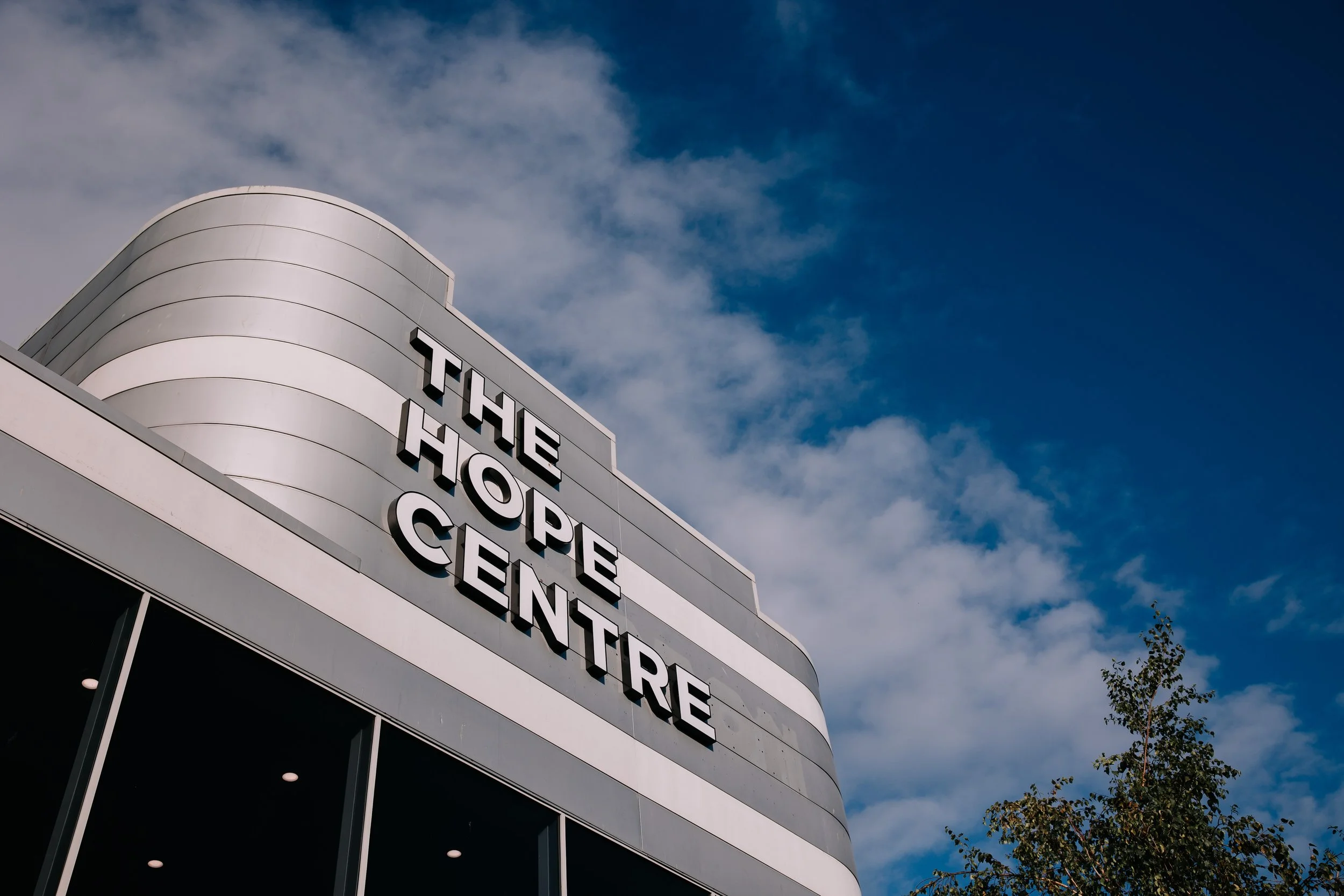
I imagine most people within the Relational Mission family have heard of, if not visited, Hope at some point – if you haven’t, I’d highly recommend you do. The building is something to behold. What used to be a derelict cinema has – by God’s grace – been converted into a thriving, multinational local church that is a spiritual home to nearly 1,000 believers.
Hope’s story really is one of answered prayer and immense generosity. They have defied the odds more than once to get where they are today. Praise be to God. He has been and continues to be faithful to the team as they seek His kingdom expansion in and beyond Ipswich.
It’s exciting times, folks! Exciting times, indeed - enjoy.
An interview with Tom Scrivens

Tom Scrivens sat down for a chat with John
JOHN: Let's start at the beginning. When did your journey with Hope Church begin?
TOM SCRIVENS: My family and I moved to Ipswich in May 2014, and I became an elder that December, aged 27. About a year later, I took over leadership of the team from Maurice Nightingale.
Back then, we gathered in an old factory building called the Orwell Centre, with around 150 people on a Sunday, including children and young people. We’re now twelve years on, and God has been so faithful. I’m not sure I could have imagined at the beginning quite where we’d end up, but the Lord is full of surprises, isn’t He?
J: When did you realise you needed somewhere bigger?
T: We saw significant growth quite quickly. In February 2016, we moved to two Sunday services, but we needed a longer-term solution.
We initially pursued a plot of land nearby, but were outbid at auction. Although we weren’t successful, I still believe God led us to consider it as an option. Looking back, that disappointment prepared us for something much, much bigger.
I think it also galvanised the church to pray and give. We held two offerings in 2016 – each got around £70 or £80 grand (£70,000-80,000)! We were blown away by the generosity. We’ve never been a wealthy church, but our faith has always been strong, and it continues to grow.
J: How did the former Odeon cinema come into the picture?
T: In February 2017, my fellow elder Mark Crawley and I met our local MP (minister of parliament - an elected parliamentary representative of a local constituency in the UK). When we asked about possible buildings, he said, ‘Have you thought about the Odeon?’
We'd just assumed someone else had plans for it. The cinema had closed in 2003 and been boarded up for 14 years. When we initially looked around, there was still popcorn lying about and syrup in the drink machines! The whole place was pretty sticky, to be honest. The roof leaked, and it smelled so damp. But we could see its potential.
We began gathering the church for monthly ‘prayer and vision’ nights. We insisted that people take the nights seriously. We wanted people to understand that we expected a 100, not 10, to show up. It felt so important to gather big numbers to pray. And it wasn't just about asking God for a building. He was enlarging our hearts for what He might do in Ipswich and helping us embrace the sacrifice involved in the changes coming our way.

Before: The cinema foyer still had its old popcorn machines and booking computers inside

After: The foyer had new flooring, lighting and a seating area installed
J: It certainly was an enormous undertaking. How did God provide?
T: There were so many answers to prayer. A big one was that a local councillor became a friend to the church. This afforded us quite a bit of influence. She was so great and helpful, and really believed in our cause.
When our planning application was considered in 2018 by Ipswich Borough Council, I was away leading Sent, which was that year part of the Relational Mission Courage conference, but she offered to speak in favour of the project. She said, ‘I will forfeit my vote on the planning committee, I will stand up for Hope Church, and I will tell them that, you know, they must, they must consider this because it is going to be good for the town.’
By God’s grace, permission was granted, and she even went on local BBC radio to explain why it was good news for Ipswich.

READY TO WORK: “We had always prayed we wouldn't need to stop the work for lack of funds, and thankfully, we never did.”

BAPTISM POOL: “In recent years, we've baptised around 30–35 people annually!”
We also saw blessings in the finances. The owner initially wanted £1.6 million, then dropped to £1.2 million - but we were eventually able to negotiate a sale of £860,000. God was definitely in that. We got the keys in September 2018 and spent nearly three years refurbishing the building, at a cost of just under £2.5 million.
During the pandemic, when we couldn't meet in person, we realised as a team that we needed to ask the church for £300,000. We'd never raised much more than £100,000 in one offering, and we didn’t have a history of people dropping in tens of thousands of pounds without blinking. I remember praying, ‘Lord, if You don't come through, I'm going to look pretty silly!’
On the weekend of the offering, £240,000 was given. I mean, someone amazingly gave £50,000. It was extraordinary. God was providing every step of the way.
Our Head of Operations, Matt Cornish, also did an extraordinary job coordinating the project. We had also prayed that we wouldn't need to stop the work for lack of funds. And we never did! There were times when we had less funds and only a few people working on the building, demolishing things or clearing things out, but we were never forced to stop. Even during the beginning of the COVID pandemic, when construction was officially shut down, there were still things we could do in the building.
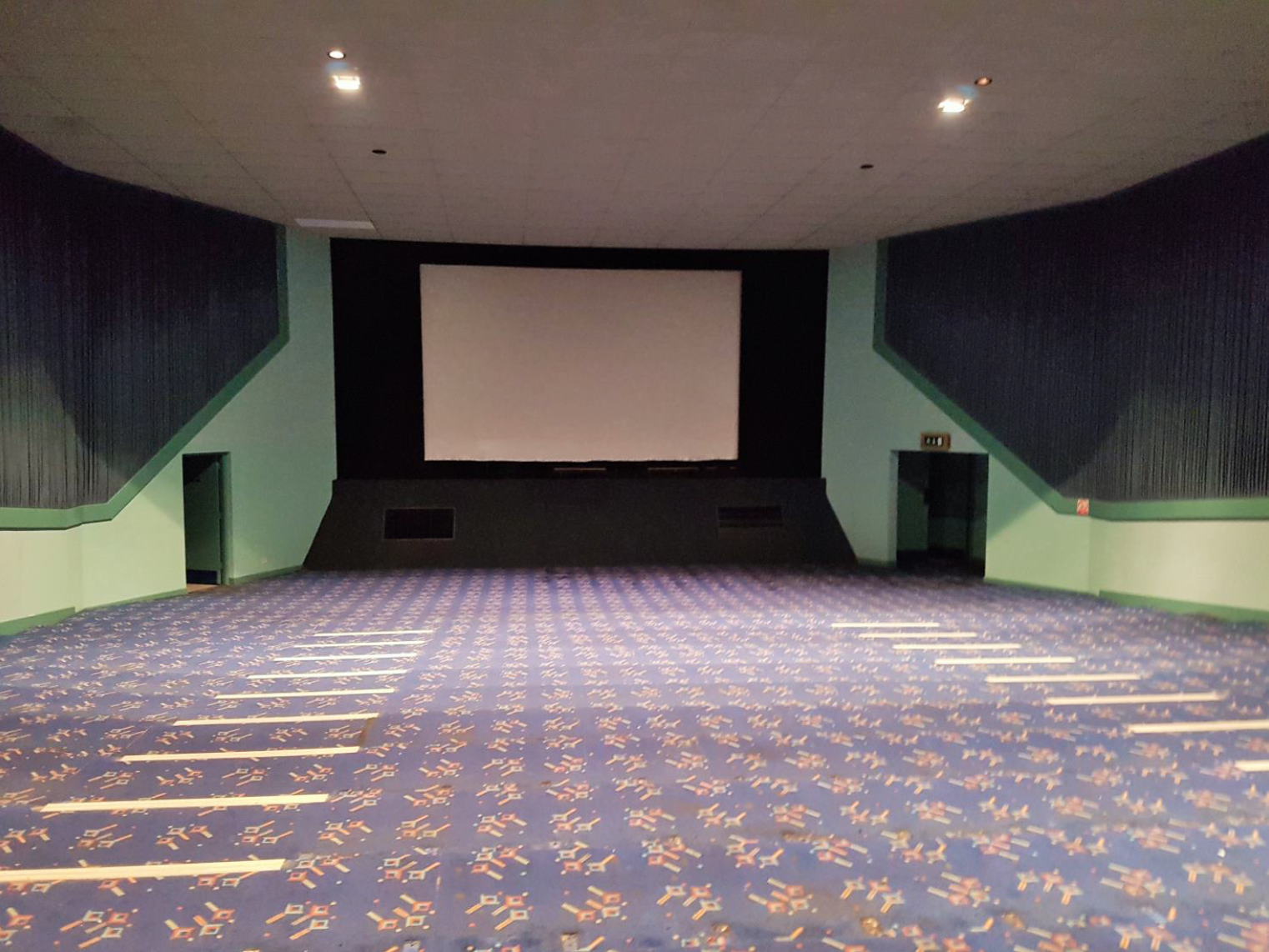
BEFORE: One of the screen rooms that became part of the main auditorium
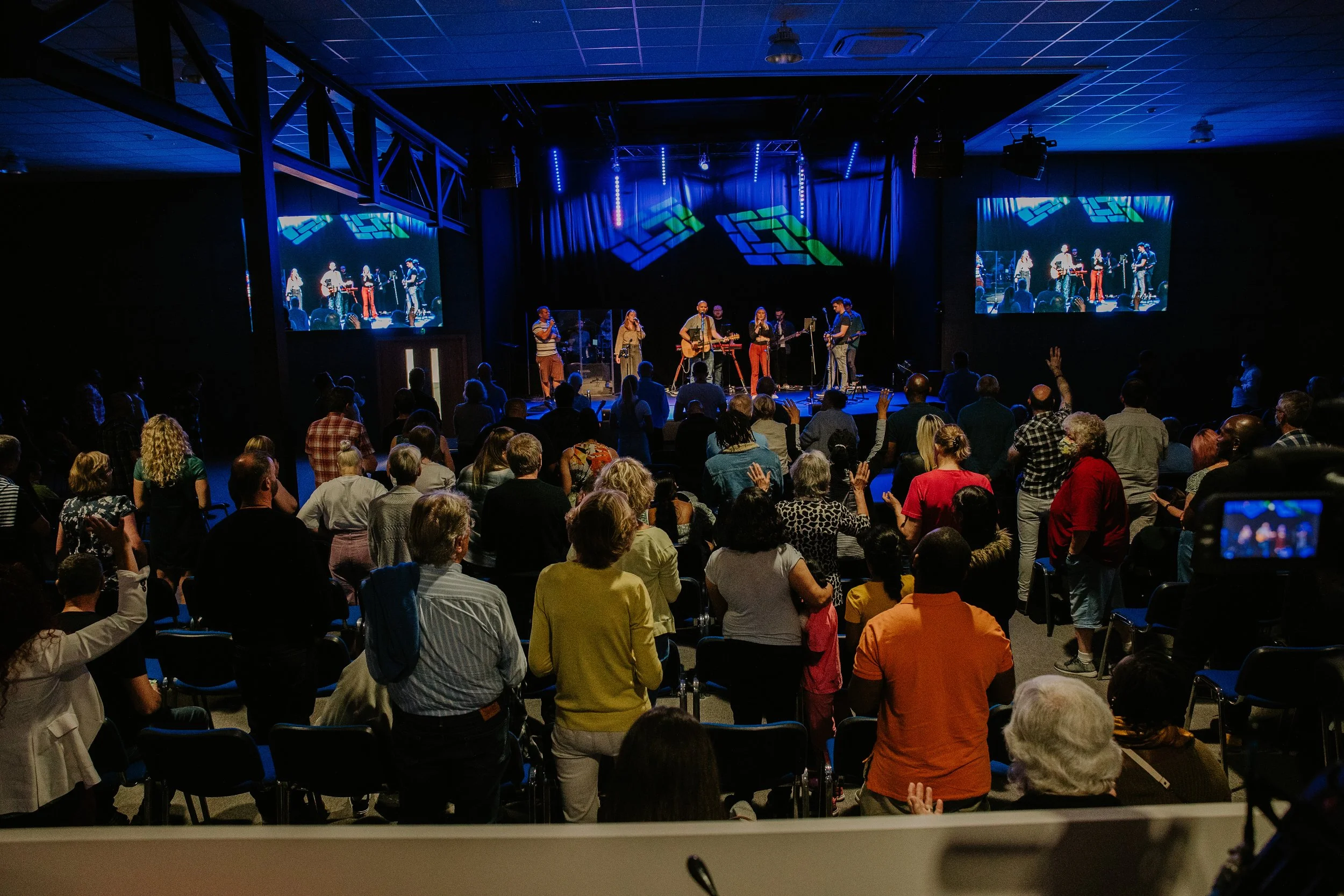
AFTER: Dividing walls knocked down to make one large auditorium
J: What was it like finally moving in?
T: Well, we started using the building during the renovations. In 2018, we held a prayer meeting in the empty cinema, and everyone brought their own chairs. Despite the damp and the smell, it was a powerful evening as we prayed and dared to dream about what God might do through us in this building.
But September 2021 - when we held our official launch - was special. Terry Virgo spoke at our opening celebration, and around 500 people gathered, even while the pandemic was still affecting things. After so many years of praying, giving and working hard, we were finally in the building.
J: It feels like a silly question, but has the building helped people encounter Jesus?
T: Absolutely. Before we even opened, we put enormous illuminated letters spelling HOPE outside. During the pandemic, people told me how much it meant to see that word shining over the town.
One day, a mother and son were taking a selfie beside the sign. One of our deacons walked past, explained that it was a church and invited them along. They both committed their lives to Jesus, and we've since baptised the son.
Another mother and daughter were peering through the windows one day when someone invited them in. Her son later joined them, and all three have been baptised. They're still with us.
The building is a gift, but what God is doing in people's lives is what really matters.
There are so many more stories I could tell. Ha, let’s not underestimate what big illuminated letters can do!
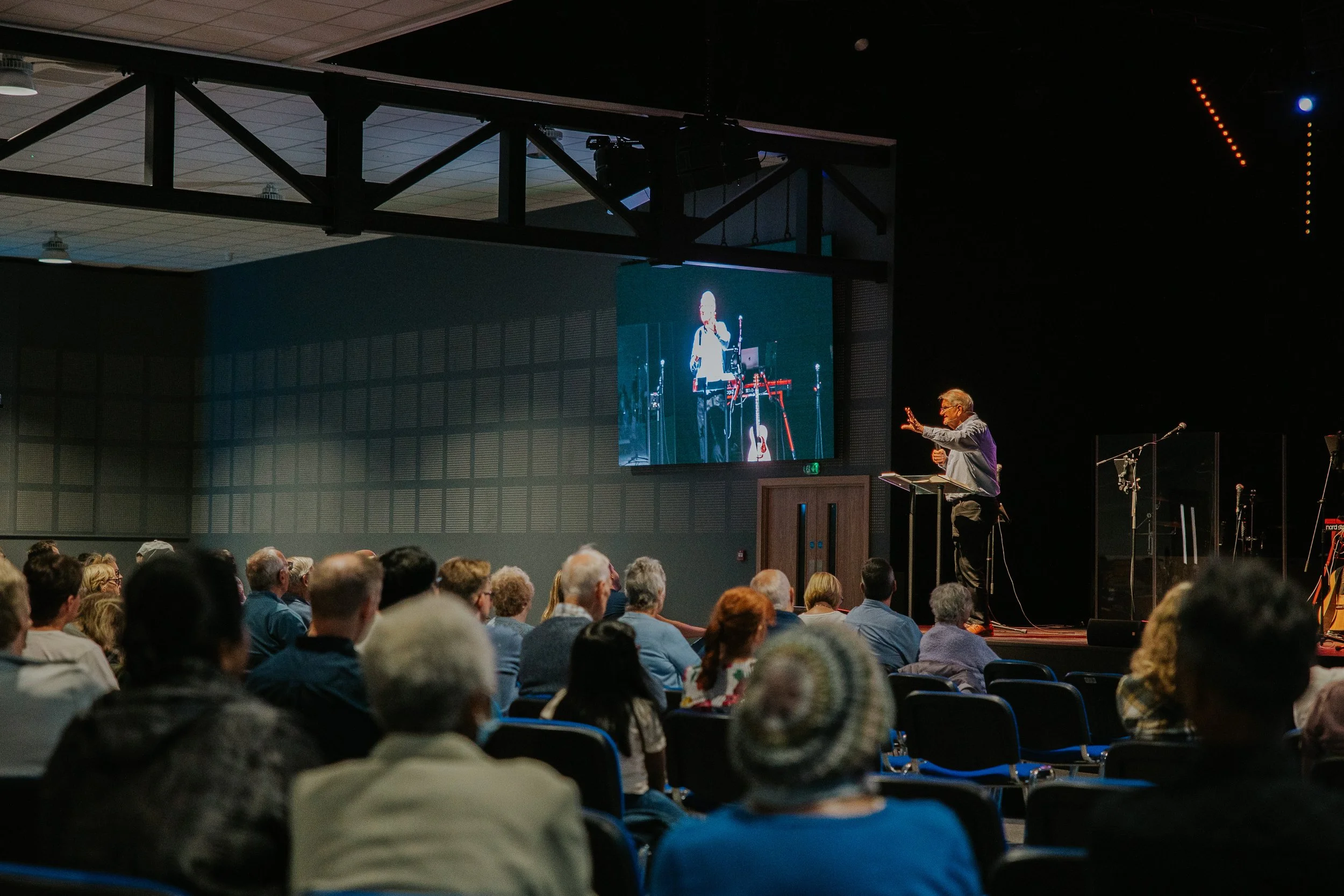
SEPTEMBER 2021 LAUNCH DAY: “Terry Virgo spoke at our opening celebration, and around 500 people gathered, even while the pandemic was still affecting things.”
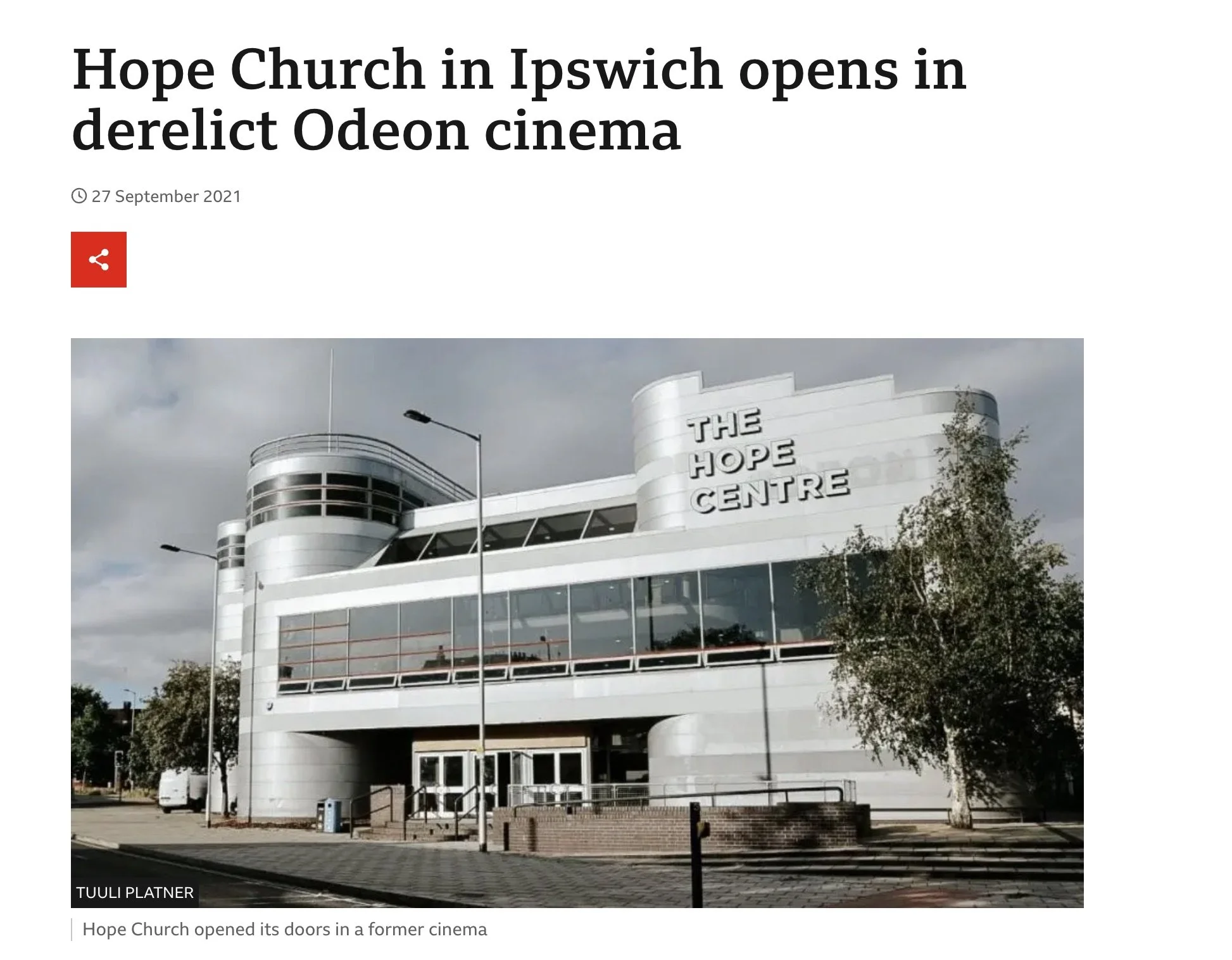
GOOD NEWS: BBC News covered the story of The Hope Centre’s opening celebration
J: What does Hope Church look like today?
T: In February 2024, we introduced two morning services again because the children's spaces were getting full. We didn't want to say, ‘We're full, and that's that, can’t take any more people.’
We now typically see around 850–900 people across our 9.15am and 11.30am services, with around 1,200 on Easter Sunday. Roughly 1,000 people would regard Hope as their church. But I would emphasise that numbers aren't the whole story.
We're a multinational, multigenerational family, with more than 40 nations represented. I'd estimate that 40–45% of the congregation is not white British. God has brought people from around the world into our town and church.
We've taught a lot about being one new humanity in Christ, and held a yearly International Sunday celebration for the past decade.
J: You’ve already spoken about this a little bit, but what stories of salvation particularly stand out?
T: One young man in his early twenties, with no church background, came across a worship song while scrolling on his phone. He began listening to it in his car and, one day, had an encounter with God.
He went to a church near his home and became a Christian. Two weeks later, the military posted him to Ipswich. We've had the privilege of discipling and baptising him. This is just one of the many examples of people coming to faith in extraordinary ways. We’ve also seen, in recent years, many young people with no church background turn to Jesus.
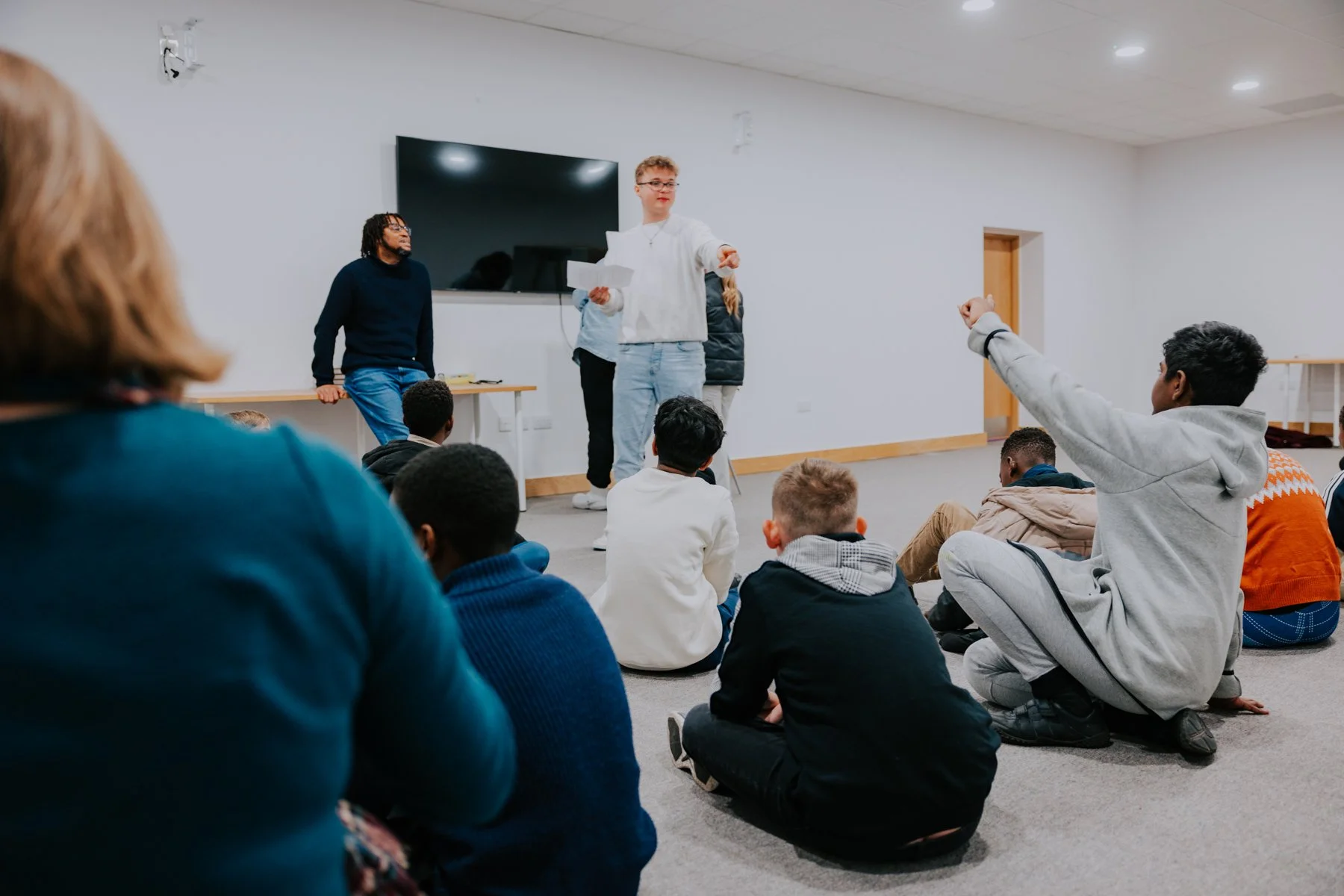
CHANGED LIVES: “A mother and daughter were peering through the windows one day when someone invited them in. Her son later joined them, and all three have been baptised.”
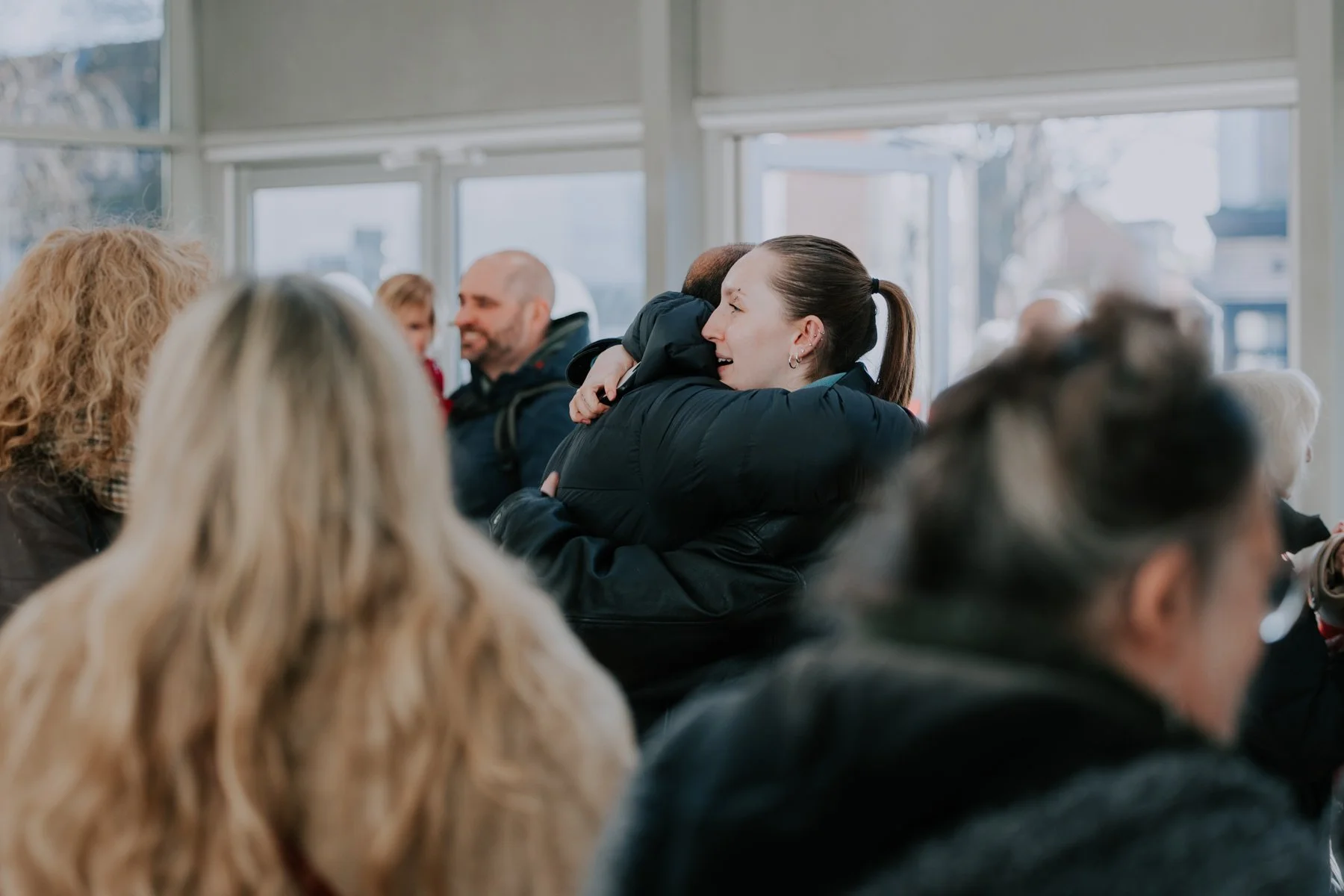
“The building is a gift, but what God is doing in people's lives is what really matters.”
We've invested heavily in Alpha, making it a clear route for people exploring Christianity, and we also have a small but growing culture of street evangelism. In recent years, we've generally baptised around 30–35 people annually. We’re halfway through this year, and we've baptised 25*.
*[Note from the editor: as of November 2026, Hope has baptised 42, with many more exploring baptism].
Of course, the challenge is helping people grow strong in faith. We've always been convinced that life together must go deeper than Sunday.
J: How do you build close community in a church of that size?
T: I think there’s a bit of a narrative that size is the enemy of meaningful community. I’m not sure that’s true. Size can make community more tricky, but that just means you have to work harder at it. The reality is that you won't know everybody, and everybody won't know you, but you can know some people deeply and be known by them. That's essential if we're going to live out the New Testament's vision of church.
This May, we launched 14 midweek communities called hubs, with many in Ipswich and, among others, Felixstowe, Hadleigh, and Woodbridge. Each one generally ranges from 25 to 55 people, and each has a team of 4 to 5 leaders – both men and women.
They meet locally for worship, friendship, to practice the spiritual gifts and mutual care. It’s the same stuff we want to see on Sunday mornings, but because of our size, only a tiny percentage of our people get to contribute from the mic on any given morning. Hubs help solve that problem.
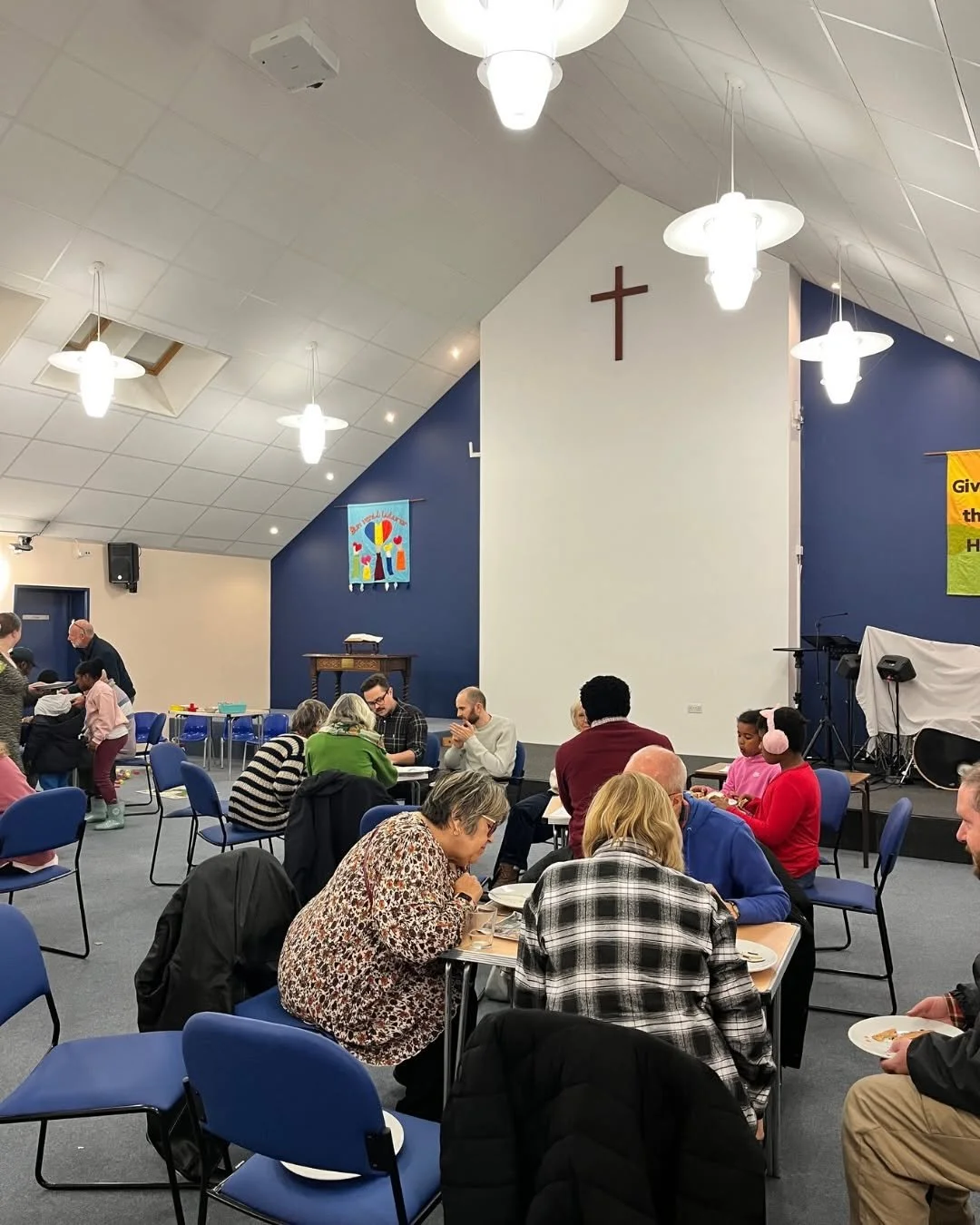
HOPE HUBS: “Each one generally ranges from 25 to 55 people, and each has a team of 4 to 5 leaders – both men and women.”
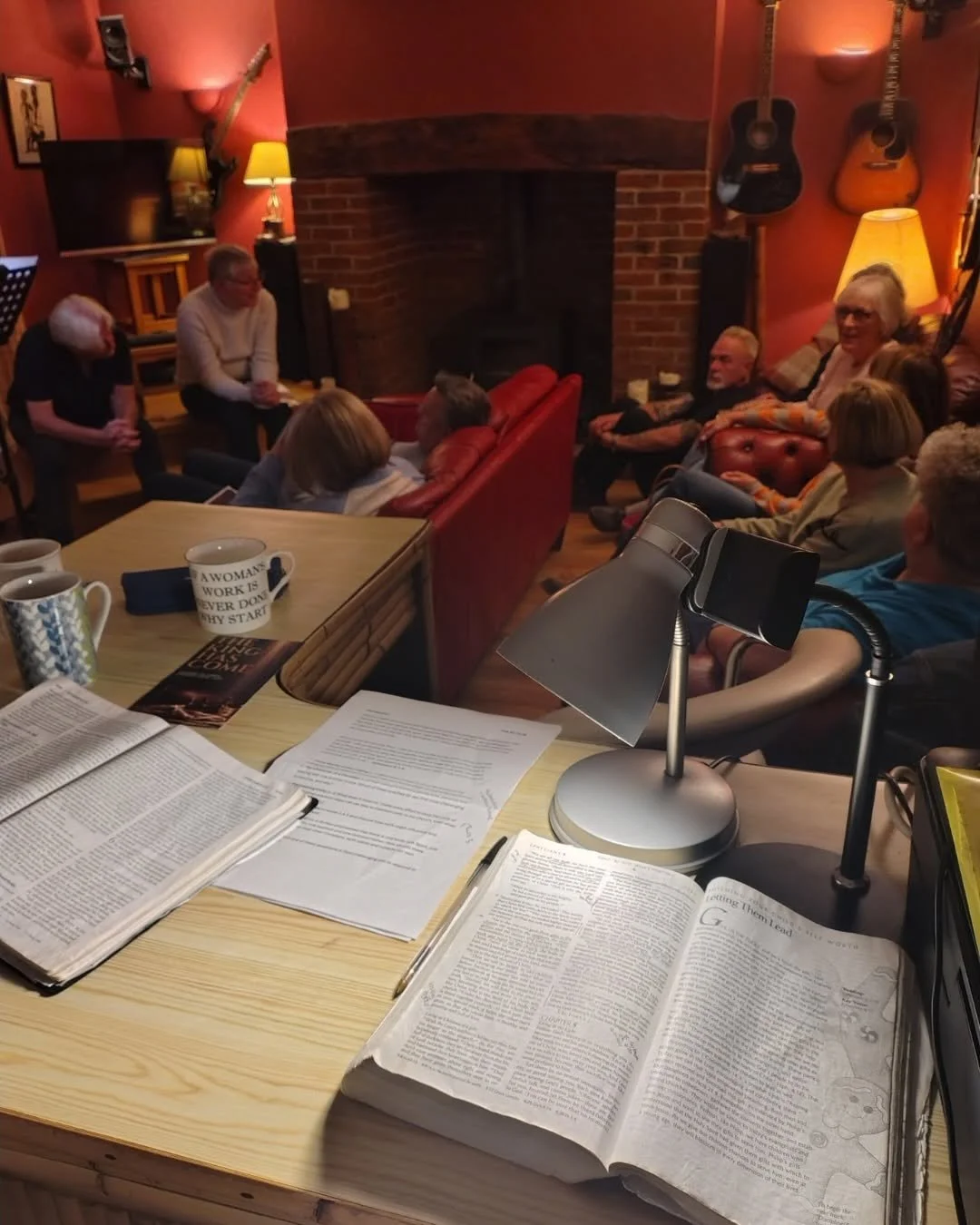
DEEPER RELATIONSHIPS: “The reality is that you won't know everybody, and everybody won't know you, but you can know some people deeply and be known by them.”
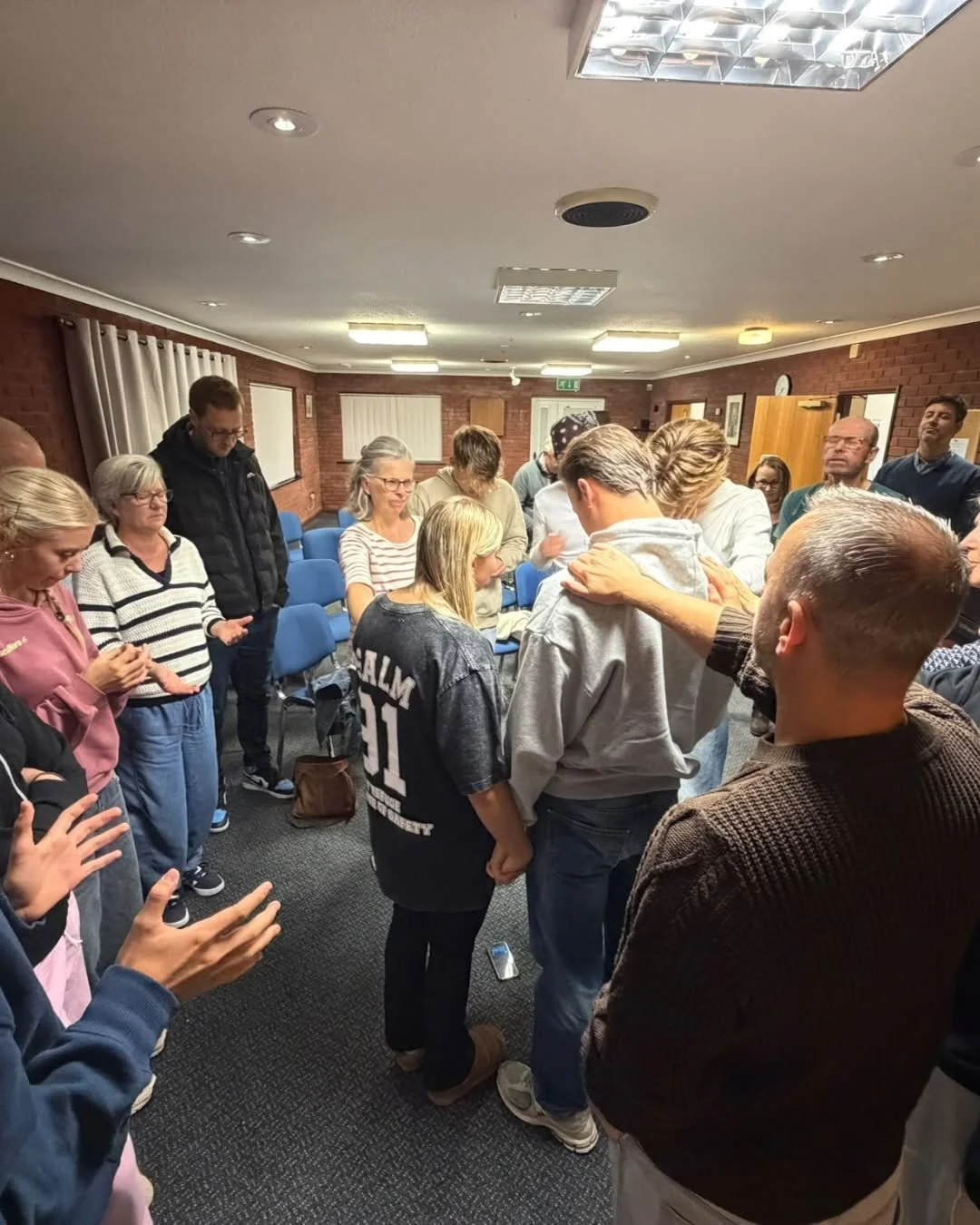
INTENTIONALITY: “Size can make community more tricky, but that just means you have to work harder at it.”
The hubs also create space for new leaders to emerge. Being part of Relational Mission means that we’re very passionate about the exercise of raising up spiritual sons and daughters.
We don't know where they'll lead, but some could become church plants or new sites. A prophetic word we received pictured teams unblocking underground pipes, with water springing up and bringing life to different places. We're carrying that picture as we look ahead.
J: What part does Hope play in the wider Relational Mission family?
T: Although we’re pretty big in and of ourselves, we're very aware that we’re part of something even bigger.
Around 250 people from Hope attended the last More Together festival, and many served in worship, children's work, stewarding and other teams. I've also been involved in the festival's core leadership. It's a family effort across Relational Mission. These gatherings build friendships and lift our eyes beyond our own church. I really think that matters enormously. We want to be a church that equips and sends people, and that’s really the ethos that lies behind the hubs initiative.
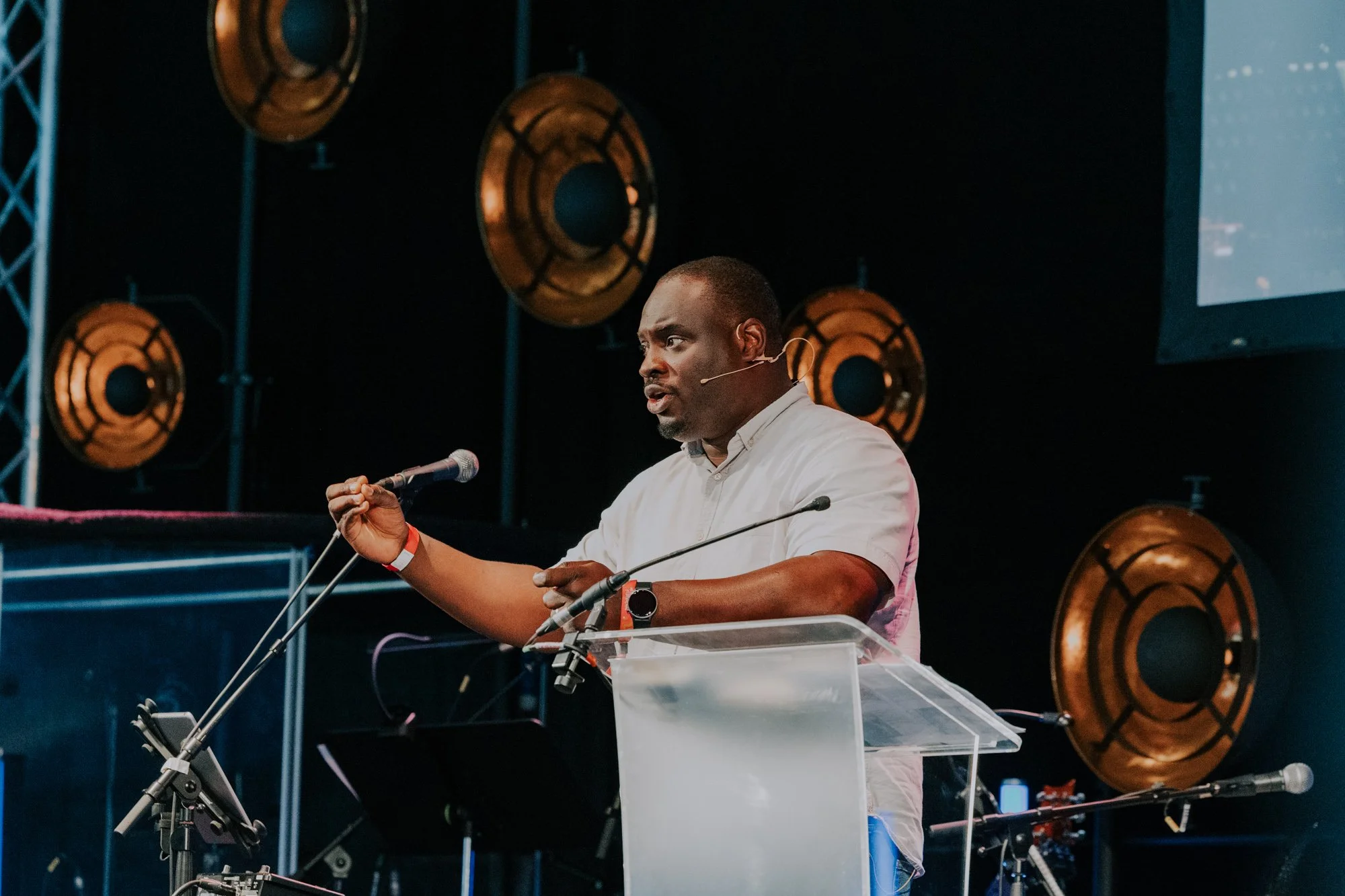
SERVING MORE WIDELY: Tomi Oyebadejo, an elder at Hope, delivering the sermon in one of the main sessions at More Together
J: Finally, what are you asking God to do in Ipswich next?
T: I would love to see a move of God that people look back on and say, ‘That was clearly revival.’
We're seeing a growing hunger for truth and a recognition of a spiritual reality, particularly among young people, but I long for something that touches the whole town and all the churches across Ipswich.
I've always loved long prayer walks, pouring my heart out to God. Through disappointments as well as encouragements, I've learned that we must keep bringing our burdens to Him and asking for big things. I don't want the difficulties of life to reduce what I expect God to do.
Ipswich has become very dear to my heart. What a wonderful thing it would be if its story became one of revival.